Loading title…
Loading description…
Why Air Quality Monitors Are Essential for Smart Buildings
The concept of smart buildings has rapidly evolved over the past decade. Today’s commercial towers, hospitals, factories, schools, and even residential complexes are designed with intelligent systems that automate lighting, HVAC, security, and energy management. These structures are no longer just physical spaces, they are integrated ecosystems driven by data and connectivity.
Among the most critical components of this ecosystem is indoor environmental monitoring. As building automation becomes more advanced, maintaining optimal indoor air quality has become a top priority. This is where air quality monitors play a vital role in supporting smarter, healthier, and more energy-efficient buildings.
In this article, we will explore why monitoring indoor air conditions is essential for smart buildings, how these systems work together with automation technologies, and why investing in advanced monitoring solutions is no longer optional it’s necessary.
The Rise of Smart Buildings
Smart buildings are designed to use automation systems to control and monitor operations such as ventilation, heating, lighting, and security. Through the integration of IoT sensors, cloud computing, and AI-driven analytics, building managers can optimize performance in real time.
Unlike traditional buildings, smart buildings:
* Collect real-time environmental data
* Adjust HVAC systems automatically
* Reduce energy consumption
* Improve occupant comfort
* Support sustainability goals
However, none of these goals can be fully achieved without monitoring indoor air conditions accurately.
Why Indoor Air Quality Matters More Than Ever
Indoor air quality (IAQ) directly impacts human health, comfort, and productivity. According to the World Health Organization, poor air quality contributes to respiratory diseases, cardiovascular problems, and reduced overall well-being.
In commercial environments, poor air can lead to:
* Increased sick days
* Reduced employee productivity
* Higher healthcare costs
* Negative brand perception
In smart buildings, data-driven decisions require accurate environmental readings. Without monitoring pollutants such as PM2.5, CO₂, volatile organic compounds (VOCs), temperature, and humidity, automation systems cannot function optimally.
This is why integrating air quality monitors into smart building infrastructure is critical.
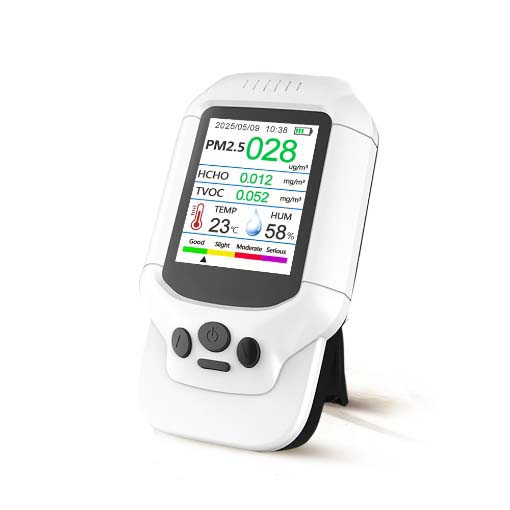
How Air Monitoring Integrates with Smart Building Systems
Modern smart buildings rely on interconnected devices through IoT networks. Monitoring systems collect data and transmit it to centralized building management systems (BMS). This allows real-time adjustments to ventilation and airflow.
For example:
* When CO₂ levels rise in a conference room, the HVAC system increases fresh air intake automatically.
* If humidity levels exceed comfort thresholds, dehumidification systems activate.
* When particulate matter increases due to external pollution, filtration systems respond immediately.
This seamless integration improves efficiency and comfort while preventing over-ventilation, which wastes energy.
Without data from air quality monitors, these automated responses would not be possible.
Enhancing Energy Efficiency Through Smart Monitoring
Energy consumption is one of the largest operational costs for commercial buildings. Heating, ventilation, and air conditioning (HVAC) systems account for a significant portion of energy use.
Traditional HVAC systems operate on fixed schedules. However, smart buildings use demand-based ventilation. Instead of running continuously, systems adjust airflow based on real-time occupancy and pollutant levels.
By using air quality monitors, buildings can:
* Avoid unnecessary over-ventilation
* Reduce electricity consumption
* Lower carbon emissions
* Extend HVAC equipment lifespan
This not only cuts operational expenses but also supports sustainability initiatives and environmental certifications.
Supporting Green Building Certifications
Green building standards such as U.S. Green Building Council and its LEED certification program emphasize indoor environmental quality as a core requirement.
To achieve certifications like LEED or WELL, buildings must demonstrate:
* Continuous monitoring of indoor pollutants
* Proper ventilation rates
* Data-driven reporting
* Occupant health optimization
Smart buildings equipped with monitoring systems are better positioned to meet these criteria. Real-time data logs provide measurable proof of compliance, which is essential for certification and regulatory audits.
Improving Occupant Comfort and Productivity
Occupant experience is a key performance indicator in modern building management. Studies consistently show that good indoor air quality enhances cognitive performance and decision-making ability.
In office settings, high CO₂ levels can cause fatigue, headaches, and decreased focus. In educational institutions, poor ventilation negatively affects learning outcomes.
By integrating air quality monitors into building automation systems, facility managers can maintain optimal indoor conditions automatically. The result is:
* Better focus and productivity
* Reduced absenteeism
* Higher tenant satisfaction
* Improved employee retention
Smart buildings are not just about technology, they are about people. Monitoring air quality ensures that technology supports human well-being.
Real-Time Data and Predictive Maintenance
One of the major advantages of smart buildings is predictive maintenance. Instead of reacting to system failures, facility managers can anticipate issues before they escalate.
Air monitoring data can reveal:
* Clogged filters
* Inefficient airflow
* HVAC system malfunctions
* Poor ventilation design
When abnormal pollutant levels persist, it signals that maintenance is required. Early detection prevents costly repairs and ensures uninterrupted operations.
Compliance with Health and Safety Regulations
Many industries must comply with strict air quality regulations. For example:
* Healthcare facilities must maintain sterile air conditions
* Manufacturing plants must control particulate emissions
* Laboratories must regulate chemical exposure
* Commercial buildings must meet occupational safety standards
Organizations such as Occupational Safety and Health Administration (OSHA) establish workplace air quality guidelines to protect employees.
Smart buildings equipped with monitoring systems can maintain digital compliance records, making audits easier and reducing legal risks.
IoT, AI, and the Future of Air Monitoring
The integration of artificial intelligence has taken building automation to the next level. AI algorithms analyze environmental data patterns and optimize ventilation systems dynamically.
Future smart buildings will:
* Predict air quality changes based on weather forecasts
* Adjust airflow based on occupancy trends
* Automatically balance energy savings with health priorities
* Provide mobile alerts for abnormal conditions
As cities become smarter and environmental awareness grows, air quality monitors will become even more essential components of intelligent infrastructure.
Enhancing Property Value and Market Appeal
Smart buildings equipped with advanced environmental monitoring systems attract higher-value tenants and investors. Companies today prioritize sustainability and employee well-being when choosing office spaces.
Buildings that provide transparent air quality data:
* Gain competitive advantage
* Increase tenant trust
* Achieve higher occupancy rates
* Command premium rental prices
With growing awareness about health and indoor air pollution, environmental transparency is no longer optional, it’s a selling point.
Reducing Risks During Global Health Crises
Recent global health events have highlighted the importance of indoor air management. Proper ventilation and filtration are critical in reducing airborne transmission risks.
Smart buildings that integrate continuous monitoring can:
* Increase fresh air circulation when needed
* Detect ventilation inefficiencies
* Provide real-time dashboards to occupants
* Improve confidence among building users
Monitoring systems serve as a preventive tool in maintaining healthier indoor environments.
Smart Cities and Connected Infrastructure
Smart buildings are foundational elements of smart cities. Data from individual buildings can contribute to city-wide environmental monitoring networks.
In the future:
* Buildings will share air quality data with municipal systems
* Urban planners will analyze pollution trends
* Real-time environmental dashboards will guide public health decisions
As global cities modernize, air quality monitors will play a strategic role beyond individual properties.
Cost vs. Long-Term Value
Some building owners hesitate to invest in advanced monitoring systems due to upfront costs. However, the long-term benefits far outweigh the initial investment.
Return on investment (ROI) includes:
* Reduced energy bills
* Lower maintenance costs
* Higher tenant retention
* Improved employee productivity
* Regulatory compliance
* Stronger brand reputation
In modern real estate, data-driven buildings outperform traditional structures in both operational efficiency and asset value.
Final Thoughts
Smart buildings are designed to be intelligent, adaptive, and human-centric. Yet, without accurate environmental data, even the most advanced automation systems cannot function effectively.
Monitoring indoor air conditions is not just about comfort, it is about health, compliance, sustainability, and operational efficiency. From optimizing HVAC performance to supporting green certifications and improving occupant well-being, air quality monitors have become indispensable measurement instruments in modern building management.
As technology continues to evolve and environmental awareness grows, the integration of intelligent monitoring systems will no longer be considered an upgrade—it will be a standard requirement.
For developers, facility managers, and property investors, the message is clear: investing in smart environmental monitoring is investing in the future of buildings themselves.